

Unlocking Namibia’s Future: The Untold Story of Oil, Activism, and Resilience
Beneath the golden dunes and azure waters of Namibia lay a story of immense promise—and peril. The discovery of oil and gas reserves has ignited hopes for economic transformation, yet it also exposes deep-rooted challenges: unemployment, corruption, and environmental threats. At the heart of this narrative stands Kaleb Amutjira, a fearless activist leading Namibian Rising, a grassroots movement determined to hold multinational corporations accountable and ensure local communities benefit from their own resources.

From infiltrating secretive offshore rigs to exposing toxic schemes sanctioned by powerful elites, Kaleb’s journey is one of courage, defiance, and unyielding hope. Alongside a band of ambitious youth, he fights not just for jobs or wealth but for justice, equality, and a sustainable future. Through satire, protest, and unwavering resolve, they challenge systemic exploitation while inspiring a nation to dream bigger.
This gripping tale delves into the shadows beneath Namibia’s oil boom—the greed, betrayal, and resistance—and celebrates the resilience of ordinary people rising against insurmountable odds. Join us as we explore how Namibia’s fight for empowerment serves as a beacon of hope for communities worldwide striving to reclaim their destinies.
Chapter One: A Glimmer in the Desert
The sun hung low over Walvis Bay, casting long shadows across the rusting cranes and skeletal rigs that dotted the coastline. It was here, amidst the salt pans and shifting dunes, where whispers of fortune had begun to ripple through Namibia’s arid landscape. Oil—thick, black gold—had been discovered beneath the waves, promising a future both dazzling and uncertain. The air buzzed with anticipation, but also unease, as if the desert winds themselves carried secrets too heavy for mortal ears.
For years, the country’s youth had languished under the weight of unemployment, their dreams as parched as the Kalahari sands. But now, there was hope—or so they were told. Hope wrapped in corporate jargon and slick PowerPoint presentations about “local content policies” and “economic transformation.” Foreign executives sipped imported champagne at Windhoek’s finest hotels, regaling each other with tales of untapped reserves and projected profits. Their suits gleamed under chandeliers, while outside, young Namibians queued for hours outside recruitment offices, clutching CVs printed on cheap paper. Yet, for every promise made by these polished interlopers, doubts lingered like an unshakeable mirage.
Kaleb Amutjira knew better than most how hollow those promises could be. At twenty-four, he was already a veteran of disillusionment. Born into a family of fishermen who once thrived off the bounty of the Atlantic, Kaleb had watched helplessly as industrial trawlers decimated marine life and left his village clinging to survival. His father, a man whose hands bore the calluses of decades spent hauling nets, often muttered bitterly about the “plastic men” from Europe—the ones who arrived with smiles and handshakes, only to strip the ocean bare and vanish without a trace. Kaleb grew up listening to stories of abundance turned scarcity, of pride eroded by desperation. Now, he stood on the brink of another seismic shift—one that threatened to wash away what little remained of Namibia’s soul.
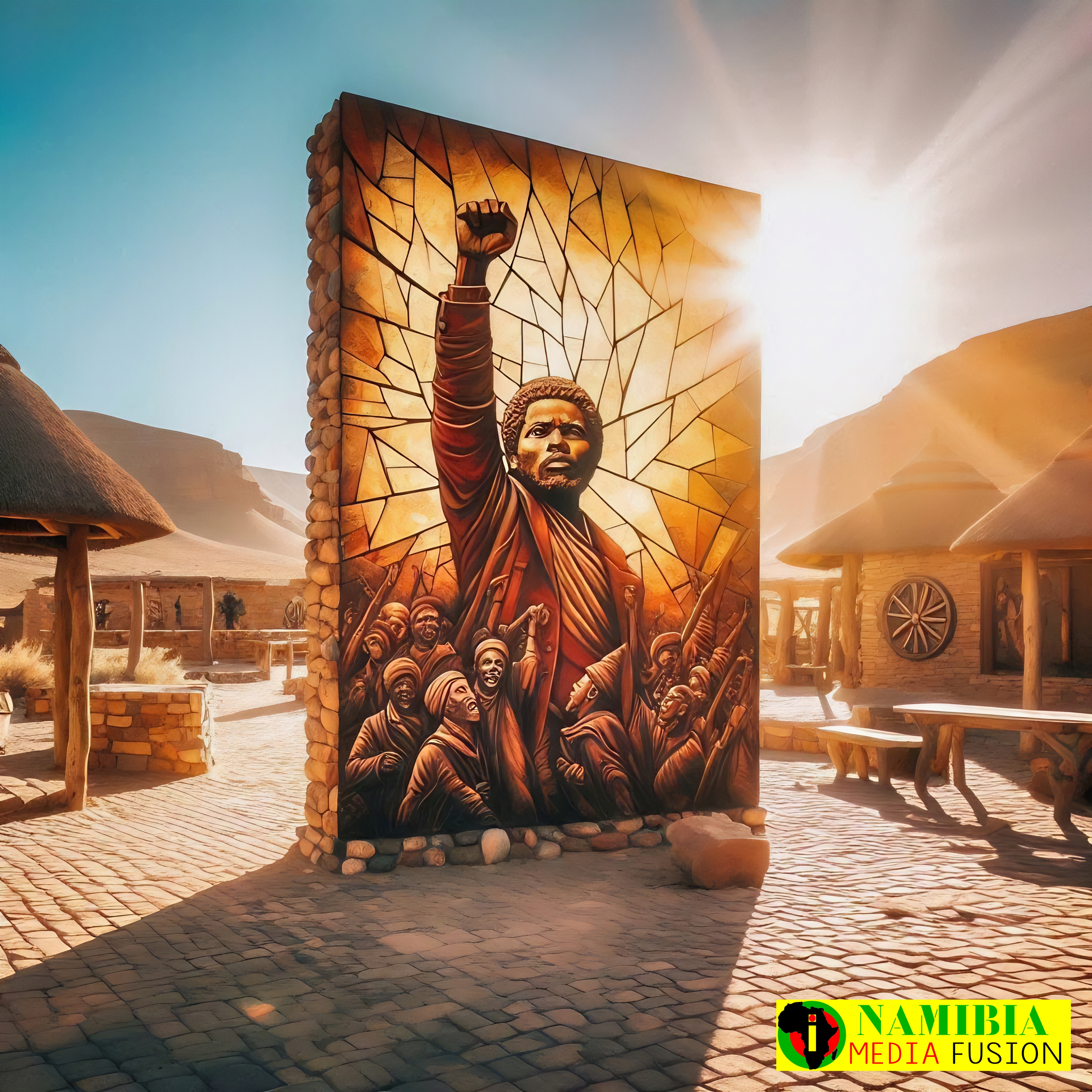
But Kaleb wasn’t one to simply stand by. He was a rebel with a cause, though not everyone saw it that way. To some, he was a troublemaker; to others, a dreamer chasing impossible ideals. Tall and wiry, with eyes that burned brighter than the midday sun, Kaleb cut an imposing figure wherever he went. His voice carried the cadence of someone who had spent countless nights debating injustice around flickering fires, fuelled by equal parts anger and optimism.
He first became aware of the oil discovery when rumours reached his small coastal town. At first, people spoke of it in hushed tones, almost reverently, as though the news itself might summon bad omens. Then came the advertisements plastered across billboards and radio waves: “Namibia’s Future is Now!” proclaimed one slogan, accompanied by images of smiling workers in hard hats standing beside gleaming machinery. Another promised “Jobs for All!” against a backdrop of pristine beaches and azure waters—a cruel irony given how polluted much of the coastline had become.
Kaleb scoffed at such propaganda. “They’ll take our land, drain our seas, and leave us with nothing but empty promises,” he warned anyone who would listen. Yet, his warnings fell largely on deaf ears. Many in his community clung to the hope that this time would be different—that somehow, the wealth buried beneath their feet would trickle down to them. After all, hadn’t the government assured everyone that local content policies would ensure Namibians benefited from the boom?
What no one mentioned—at least not publicly—was the sinister web of corruption lurking behind closed doors. Deals struck in dimly lit boardrooms, bribes exchanged in briefcases lined with velvet, contracts awarded based on favours rather than merit. Kaleb had seen enough to know the truth: the real beneficiaries of Namibia’s newfound riches wouldn’t be its people, but the same foreign conglomerates that had bled the nation dry for decades.
And yet, amidst the cynicism and despair, something stirred within him—a spark of defiance, perhaps even mischief. If the system was rigged, then why not play by his own rules? Why not fight fire with fire?
Thus began Kaleb’s radical crusade. Armed with nothing more than a battered laptop, a knack for digging up dirt, and a biting sense of humour, he launched a satirical blog titled Black Tide Chronicles. Each post skewered the hypocrisy of oil executives and politicians alike, exposing their greed with scathing wit. One particularly popular entry likened PetroLuxe International’s CEO to a hyena feasting on carrion, complete with a Photoshopped image of the man wearing a fur coat and gnashing teeth. Another dissected the absurdity of a recent press release claiming that offshore drilling posed “zero environmental risk,” pointing out that even the seagulls seemed to disagree (as evidenced by photos of oil-slicked feathers).
While many found solace in Kaleb’s biting commentary, others dismissed him as reckless or naive. “You think jokes will change anything?” sneered a local councillor during a heated debate. “This isn’t playtime, boy. These are powerful people you’re messing with.”
Kaleb grinned wolfishly. “Powerful people make powerful enemies,” he shot back. “Besides, laughter’s the only weapon we’ve got when they’ve taken everything else.”
His antics soon caught the attention of a group of like-minded individuals, each grappling with their own grievances against the encroaching tide of exploitation. There was Tuli, a brilliant engineer frustrated by the lack of opportunities for women in STEM fields; Jonas, a former fisherman turned activist whose boat had been seized by debt collectors; and Elina, a fiery journalist determined to expose the dark underbelly of Namibia’s energy sector. Together, they formed an unlikely alliance, united by a shared vision of justice—and a healthy dose of irreverence.
Their adventures took them from the bustling streets of Windhoek to the remote reaches of the Skeleton Coast, navigating treacherous landscapes both literal and metaphorical. Along the way, they uncovered secrets that chilled them to the bone: toxic waste dumped illegally near indigenous settlements, forged documents concealing illegal exports, and shadowy figures pulling strings from afar. Each revelation brought them closer to the heart of the conspiracy—but also deeper into danger.

Yet, for all the cruelty and corruption they encountered, there were moments of lightness, too. Late-night brainstorming sessions devolved into impromptu dance parties, with Tuli teaching everyone the latest kwaito moves. Road trips through the desert were punctuated by whimsical debates over whether ostriches could outrun cheetahs (Jonas insisted they could; Elina vehemently disagreed). Even in the darkest of times, their camaraderie provided a lifeline, a reminder that humanity could still shine through the grime.
As the stakes grew higher, so did the tension. Kaleb found himself torn between his desire for vengeance and his longing for redemption. Could he truly dismantle a system built on centuries of inequality, or was he destined to become just another cog in the machine? And what price would he have to pay for daring to challenge the status quo?
In the end, A Glimmer in the Desert was not merely a story of greed and betrayal, but of resilience and hope. It was a tale that captured the essence of Namibia itself—a land of stark contrasts, where beauty and brutality coexisted in uneasy harmony. Through Kaleb’s journey, readers were invited to confront uncomfortable truths while holding on to the belief that change, however elusive, was always possible.
Because every so often, all it took was a single spark to ignite a revolution.
Chapter Two: The Devil’s Bargain
It started with a job posting. Or rather, it should have started with one. For weeks, Kaleb scoured online portals, attending recruitment drives hosted by multinational oil giants eager to tap into Namibia’s newfound wealth. Each application ended the same way: polite rejection emails citing “insufficient experience” or “technical gaps.” Meanwhile, expatriates from Houston and Aberdeen arrived weekly, their salaries bloated, their accents heavy, their knowledge vast—but their roots nonexistent.
To Kaleb, these rejections felt like a slap in the face. His frustration simmered beneath the surface, boiling over whenever he saw another foreign worker disembark at Walvis Bay, greeted with fanfare as if they were royalty. These were people who had never set foot on Namibian soil until recently, yet they were handed golden opportunities while locals scrambled for scraps. It was an injustice so cruel that it bordered on absurdity—a cruel joke played by fate itself.
Frustrated but undeterred, Kaleb decided to take matters into his own hands. He knew he couldn’t fight this battle alone, so he reached out to those around him—friends, acquaintances, strangers who shared his anger and despair. What emerged was a ragtag group of misfits, each carrying their own scars inflicted by systemic neglect. There was Tuli, whose brilliance in engineering had been dismissed because she was a woman; Jonas, whose fishing boat had been seized after years of meagre earnings failed to cover mounting debts; and Elina, whose investigative pieces exposing corporate malfeasance had earned her more enemies than accolades. Together, they formed Namibian Rising , a grassroots movement aimed at holding companies accountable to their local content pledges.
Their first target? PetroLuxe International, a behemoth notorious for its empty rhetoric on community engagement. The company plastered billboards across Windhoek with slogans like “Empowering Namibia Through Energy!” , accompanied by images of smiling African workers standing proudly beside gleaming machinery. But behind the glossy veneer lay a sinister truth. Through relentless research and covert networking, the group uncovered damning evidence: despite boasting about training programs for Namibians, PetroLuxe had outsourced nearly all its operations to foreign subcontractors. Worse still, the few locals hired were relegated to menial tasks—cleaning rigs, hauling equipment, fetching coffee—earning pittance while their Western counterparts pocketed six-figure salaries.
“This is theft,” Kaleb muttered during one late-night strategy session, surrounded by stacks of documents and half-empty energy drink cans. “They’re stealing our future right out from under us.”
Elina leaned forward, her sharp eyes glinting in the dim light. “And we’re going to expose them. Every dirty secret, every lie—they’ll regret ever setting foot in this country.”
The plan was audacious, bordering on reckless. Armed with incriminating data, forged credentials, and sheer bravado, the group infiltrated PetroLuxe’s inner sanctum. Posing as interns and contractors, they gained access to restricted areas where files were stored, emails exchanged, and decisions made. What they discovered chilled them to the bone: not only was PetroLuxe exploiting Namibian labour, but it was also engaging in illegal practices that threatened both the environment and public health. Toxic waste was being dumped illegally near indigenous settlements, contaminating water sources and poisoning livestock. Contracts worth millions were awarded based on bribes disguised as “consultancy fees,” lining the pockets of corrupt officials while leaving ordinary citizens to suffer.
Yet, amidst the grim revelations, there were moments of dark humour. During one particularly tense stakeout, Jonas remarked dryly, “You know, I think these guys would sell their own mothers for a better quarterly report.” Everyone laughed, though the laughter carried an edge of bitterness. Humour became their coping mechanism, a way to process the enormity of what they were up against.
When the time came to strike, Kaleb didn’t hold back. At a fiery town hall meeting in Swakopmund, packed with angry residents and curious journalists, he took the stage. Dressed in jeans and a faded t-shirt emblazoned with the words “No More Empty Promises,” he looked every bit the rebel leader he had become.
“We’re not asking for charity,” he declared, his voice cutting through the murmurs like a blade. “We’re demanding fairness. We’re demanding inclusion. This is our land, our resources—and we will no longer let others profit while we suffer!”
His words ignited a spark. Protests erupted across coastal towns, drawing attention from national media and even international watchdogs. People marched in the streets, chanting slogans like “Our Oil, Our Future!” and “Stop the Exploitation!” Social media buzzed with hashtags calling for accountability. For the first time in years, Namibians felt a sense of agency, a belief that change was possible.
But behind closed doors, corruption festered like rot. Politicians accepted bribes disguised as “consultancy fees,” bureaucrats turned a blind eye to violations, and activists found themselves silenced—sometimes permanently. One evening, as Kaleb walked home from a rally, he noticed a black SUV trailing him. Its windows were tinted, obscuring whoever sat inside, but the message was clear: tread carefully, or else.
Despite the threats, Kaleb refused to back down. Instead, he doubled down, using his blog to mock those trying to intimidate him. In one post titled “The Phantom Menace,” he described the SUV incident in vivid detail, likening his pursuers to cartoon villains. “Next time, maybe bring a white cat to stroke,” he quipped. “Really completes the whole ‘evil mastermind’ vibe.”
While some admired his courage, others warned him to tone it down. “You’re playing with fire,” Tuli cautioned during a heated argument. “These people aren’t joking. They’ve killed before, and they’ll do it again.”
Kaleb shrugged, though deep down, he felt the weight of her words. He knew the risks—he’d seen enough tragedies unfold to understand how ruthless the system could be. Yet, something inside him refused to yield. Perhaps it was pride, or perhaps it was hope. Either way, he clung to it like a lifeline.
As tensions escalated, so did the stakes. Namibian Rising found itself caught in a cat-and-mouse game with powerful adversaries determined to crush them. Meetings were held in secret locations, phones were left behind to avoid surveillance, and paranoia became a constant companion. Yet, through it all, the group remained united, bound together by a shared vision of justice.
One night, huddled around a flickering lantern in the desert, Kaleb stared at the stars above. “Do you ever wonder if we’re fighting a losing battle?” he asked softly.
Tuli smiled, her expression equal parts weary and resolute. “Maybe. But even if we lose, at least we’ll go down swinging.”
Her words echoed in Kaleb’s mind long after the others fell asleep. They reminded him of why he had started this journey in the first place—not for glory or revenge, but for the chance to create a better future. A future where Namibia’s youth could dream without fear, where its resources benefited all, not just a privileged few.
And so, the fight continued. Against insurmountable odds, against sinister forces, against the very fabric of a broken system. It was a battle fraught with danger, heartbreak, and uncertainty—but also resilience, camaraderie, and hope. Because sometimes, the smallest acts of rebellion could ignite the largest revolutions.
In the end, The Devil’s Bargain was not just a chapter in Kaleb’s story—it was a testament to the power of resistance, a reminder that even in the darkest of times, the human spirit could shine brightly.
Chapter Three: Shadows Beneath the Surface
One evening, as Kaleb sifted through documents in his cramped flat—a chaotic jumble of papers, empty coffee mugs, and a laptop balanced precariously on an upturned crate—his phone buzzed. The message was brief but electrifying: “Secret meeting tonight. Floating rig 30 km offshore. Code name: Black Tide.” No sender ID, no signature. Just those cryptic words, delivered with the eerie precision of someone who knew too much.
Kaleb’s heart raced. This wasn’t the first anonymous tip-off he’d received, but something about this one felt different—darker, heavier. It carried the weight of secrets buried so deep they threatened to suffocate anyone foolish enough to dig them up. Intrigued—and more than a little suspicious—he rallied his team. Disguised as maintenance workers, armed with fake IDs and tools borrowed from Jonas’s old fishing boat, they infiltrated the rig under cover of darkness.
The journey out to sea was both thrilling and nerve-wracking. The waves churned violently, their rhythm disrupted by the looming shadow of the floating rig ahead. Its skeletal structure loomed against the moonlit sky, a monstrous silhouette that seemed almost alive, its steel beams groaning like the bones of some ancient leviathan. As they approached, Kaleb couldn’t shake the feeling that they were walking into a trap. But turning back wasn’t an option—not when the stakes were this high.
Once aboard, the group moved swiftly, blending seamlessly into the background noise of clanking machinery and shouted orders. Their disguises held up well enough; nobody questioned the ragtag crew lugging toolboxes through the labyrinthine corridors. Yet, beneath their casual exteriors, tension simmered. Every creak of metal, every distant shout, sent shivers down their spines. They weren’t just trespassing—they were stepping into the belly of the beast.
It didn’t take long for them to find what they were looking for—or rather, what they weren’t prepared to see. Hidden deep within the rig’s bowels was a clandestine lab, tucked away behind reinforced doors marked with hazard symbols and warnings in multiple languages. Inside, scientists in white coats worked feverishly, their faces illuminated by the cold glow of computer screens and bubbling test tubes. What they were doing defied comprehension—at least at first glance.
“These techniques… they’re insane,” Tuli whispered, her voice trembling as she scanned a series of technical diagrams. “They’re experimenting with unconventional extraction methods that inject chemicals directly into the seabed. If anything goes wrong—and it will—they could contaminate entire ecosystems.”
Her words hung in the air, heavy with dread. Kaleb felt a chill run down his spine as he pieced together the implications. This wasn’t just about greed any more—it was about destruction on a scale so vast it bordered on apocalyptic. These weren’t mere experiments; they were gambles, reckless bets placed on the future of Namibia’s environment and people. And the worst part? The operation had been sanctioned at the highest levels of government.
Documents strewn across a desk confirmed their worst fears. Kickbacks flowed freely between PetroLuxe executives and key officials, ensuring silence in exchange for power and wealth. Contracts worth billions were signed without oversight, environmental impact assessments ignored or falsified. Entire communities stood to lose everything—their livelihoods, their health, their very lives—all while politicians and CEOs lined their pockets with blood money.
“This isn’t just greed,” Tuli murmured, her fists clenched tightly. Her voice trembled not with fear, but with rage. “This is betrayal.”
Betrayal indeed. But also opportunity.
For Kaleb, the discovery was both exhilarating and crushing. On one hand, they now had irrefutable proof of the corruption and danger lurking beneath the surface. On the other, the sheer scale of the conspiracy made him question whether exposing it would make any difference at all. Would anyone listen? Or would the truth be buried alongside the toxic waste already poisoning the ocean?
As they gathered evidence—photos, files, audio recordings—Kaleb couldn’t help but marvel at the absurdity of it all. Here they were, a ragtag band of misfits, sneaking around like characters in some twisted spy novel. At times, he almost laughed at the ridiculousness of their situation. Other moments left him breathless with anger, despair clawing at his chest like a wild animal desperate to escape.
“This is like something out of a dystopian thriller,” Elina quipped, snapping photos of a particularly damning document. “You know, if Hollywood ever makes a movie about us, I want Meryl Streep to play me.”
Jonas snorted. “And who’s playing you, Kaleb? Jason Bourne?”
Despite the levity, the gravity of their mission weighed heavily on everyone. They knew the risks—they’d seen firsthand how far those in power would go to protect their interests. Still, there was a strange beauty in their defiance, a sense of camaraderie that transcended fear. Together, they were more than individuals fighting against insurmountable odds; they were a force of nature, a tidal wave crashing against the rocks of injustice.
By the time they returned to shore, dawn was breaking over the horizon, painting the sky in hues of orange and pink. Exhausted but triumphant, they huddled together on the beach, sifting through the evidence they’d collected. Each file, each photo, told a story of greed, corruption, and betrayal—but also resilience, courage, and hope. For every act of cruelty, there was an equal and opposite reaction waiting to push back.
“We can’t stop now,” Kaleb said firmly, his eyes blazing with determination. “If we don’t fight for our future, who will?”
His words echoed in the stillness, carried away by the wind but etched deeply into the hearts of those who heard them. In that moment, surrounded by the vast expanse of sand and sea, they felt the enormity of what they were up against—and the boundless potential of what they could achieve.
Because sometimes, even in the darkest shadows, light finds a way to break through. And when it does, it illuminates not just the horrors hidden beneath the surface, but the strength and spirit of those brave enough to confront them.
Chapter Four: Rising Tides
Armed with irrefutable proof, Kaleb faced a choice that would define not only his own fate, but the future of Namibia itself. Should he expose the conspiracy publicly and risk imprisonment—or use it as leverage to force real change? The weight of decision bore down on him like the oppressive heat of an inland desert wind. He knew either path carried its own perils; silence could mean complicity, while speaking out might unleash chaos.
After hours of heated debate—interrupted only by Jonas’s dry quips about “choosing between jail or glory”—Namibian Rising opted for a bold strategy. They decided to play both sides against each other, leaking select details to investigative journalists while presenting their findings directly to sympathetic lawmakers. It was a high-stakes gambit, one that required precision and nerve. If executed poorly, they’d be branded traitors or worse. But if successful, it could shift the balance of power in ways no one had dared imagine.
The first leak hit social media like wildfire. A whistleblower account, Black Tide Truth , posted grainy photos of the clandestine lab aboard the floating rig alongside excerpts from incriminating documents. Within hours, hashtags like #ExposePetroLuxe and #NamibiaNotForSale trended nationwide. Journalists scrambled to verify the claims, while citizens took to the streets in protest. The images were haunting: toxic chemicals bubbling ominously, scientists in hazmat suits working under harsh fluorescent lights, and contracts signed by officials whose faces now stared back at them from televisions and newspapers.
Meanwhile, Kaleb and his team met secretly with a handful of lawmakers who still retained a shred of integrity—or at least enough self-preservation instinct to distance themselves from scandal. Sitting in dimly lit rooms, they laid out their demands: mandatory quotas for local hires, transparent procurement processes, substantial investment in education and skills development, and independent oversight committees to ensure compliance. In return, they promised cooperation—but also warned of further leaks if progress stalled.
The fallout was immediate and electrifying. Public outrage forced PetroLuxe to suspend operations pending investigation. Share prices plummeted, and executives issued panicked statements denying wrongdoing even as evidence mounted. Emboldened by the victory, other companies scrambled to comply with stricter regulations. Slowly but surely, opportunities began opening up for Namibians. Contracts once reserved exclusively for foreign firms trickled into local hands. Training programs expanded, offering young engineers and technicians access to coveted internships. Schools incorporated STEM curricula tailored to the energy sector, sparking dreams among students who had never considered careers beyond fishing or farming.
Yet, progress came at a cost. For every triumph, there was a price to pay—a toll exacted in threats, isolation, and fear. Posters bearing Kaleb’s face appeared across Lüderitz, branding him a criminal and warning others against associating with him. Anonymous calls flooded his phone, voices dripping with menace: “You think you’re untouchable? We’ll bury you.” Friends distanced themselves, fearing guilt by association. Even Tuli, his closest ally, grew distant, torn between loyalty and self-preservation.
“Do you ever wonder if it’s worth it?” she asked one evening, her voice barely above a whisper. They sat on the edge of Swakopmund’s pier, watching the sunset bleed orange and red over the Atlantic. “All this fighting… what happens when they come for us?”
Kaleb didn’t answer right away. Instead, he leaned back, letting the cool breeze wash over him. Finally, he spoke, his tone steady despite the storm raging inside. “It’s already worth it,” he said. “Look around. People are waking up. Young kids are dreaming bigger than before. That’s something they can’t take away.”
But even as he said it, doubt gnawed at him. Was he leading his friends—and himself—into ruin? Or was this the necessary sacrifice for a better tomorrow?
Despite the growing danger, moments of triumph kept him going. There was the day a young engineer named Maria secured an internship with a major contractor, her eyes shining with pride as she shook Kaleb’s hand. Or the time Jonas received funding to start a cooperative supplying equipment to offshore rigs, his laughter echoing like music after years of hardship. And then there were the letters—stacks of them—from students inspired by Namibian Rising ’s fight, vowing to study harder, dream bigger, and reclaim their country’s future.
Each success fuelled Kaleb’s resolve, reminding him why he’d embarked on this perilous journey. Yet, beneath the surface, cracks began to show. Sleep eluded him, stolen by nightmares of shadowy figures closing in. His humour, once sharp and biting, dulled under the strain. Even Elina noticed, teasing less frequently and casting worried glances his way.
One particularly chilling night, as Kaleb walked home from a meeting, he spotted a black SUV idling near his flat building. Its headlights flicked off as he approached, leaving only the faint glow of a cigarette ember visible through the windscreen. He quickened his pace, heart pounding like a war drum. When he reached his door, he hesitated, scanning the street behind him. The SUV remained parked, silent and watchful.
Inside, he locked the door and drew the curtains, though he knew it made little difference. They were always watching. Always waiting.
And yet, amidst the paranoia and exhaustion, there were flashes of beauty—moments so poignant they almost hurt. Like the evening he attended a school event where children performed songs about hope and resilience, their voices rising like birdsong against the backdrop of a setting sun. Or the quiet camaraderie shared during late-night planning sessions, when laughter erupted unexpectedly, breaking the tension like a sudden rainstorm.
Through it all, Kaleb clung to the belief that change was possible—not just incremental shifts, but seismic transformations that would reshape the very foundation of Namibian society. He saw glimpses of it everywhere: in the determination of young activists organizing protests, in the defiance of entrepreneurs refusing to accept crumbs, in the courage of ordinary citizens standing up to those who sought to exploit them.
But the road ahead remained treacherous. Corruption ran deep, its roots tangled with power and privilege. For every step forward, there seemed to be two steps back. Laws passed were often ignored; promises made were routinely broken. Still, Kaleb pressed on, driven by a vision of a Namibia where opportunity wasn’t a privilege reserved for the few but a right extended to all.
Because sometimes, rising tides weren’t just about water—they were about people lifting each other higher, buoyed by hope and bound together by shared struggle. And though the waves crashed violently against the shore, threatening to drag everything into the abyss, Kaleb believed they could still find solid ground.
Even if it meant building it themselves.
Chapter Five: Legacy of the Black Tide
Years later, standing atop a bluff overlooking the sea, Kaleb reflected on the road travelled. The scars ran deep—not just on his body but on his spirit. His hands bore calluses earned not from hauling nets like his father’s had been, but from gripping protest placards and pounding keyboards late into the night. His face carried lines etched by sleepless nights spent strategising, debating, and fighting battles that often felt unwinnable. Yet, despite the toll it had taken, there was a quiet pride in him as he gazed out at the bustling harbour below.
The transformation was undeniable, though far from complete. Rigs operated by skilled Namibian crews hummed with activity, their movements precise and purposeful. Supply vessels docked alongside boats owned by local entrepreneurs—men and women who once scraped by on meagre earnings now commanding fleets and contracts worth millions. Schools buzzed with energy, classrooms filled with students eager to learn about engineering, geology, and renewable energy. Their laughter echoed through corridors where silence had reigned for too long.

But perfection? No, this was no fairy tale ending. Corruption still lurked in the shadows, its tendrils clinging stubbornly to power structures unwilling to let go. Greed remained a spectre haunting boardrooms and government offices alike, waiting for complacency to take hold so it could rear its ugly head once more. And yet, amidst these lingering threats, hope felt tangible—a fragile flame flickering defiantly against the winds of exploitation.
As the sun dipped below the horizon, painting the sky in hues of orange and crimson, Kaleb whispered a silent vow. Whatever challenges lay ahead, whatever battles remained unfought, he would continue fighting—for justice, for equality, for the future of his people. Because buried beneath the sands and seas of Namibia lay not just oil and gas, but potential. And potential, when nurtured, could move mountains.
Cruelty Meets Redemption
Kaleb’s journey had been anything but kind. The cruelty of the system he fought against was almost suffocating in its relentlessness. Friends turned away, allies fell silent under pressure, and enemies struck without mercy. There were days when despair clawed at his chest like a wounded animal, threatening to drag him into darkness. But even in those moments of crushing defeat, something within him refused to yield. Perhaps it was the memory of his father’s weathered face, or the stories of elders who spoke of a time before greed poisoned the land. Whatever it was, it kept him moving forward, one bruised step at a time.
Yet, redemption came in unexpected ways. It arrived in the form of young engineers securing internships, mothers sending their children to school knowing they might one day design rigs instead of cleaning them, and fishermen-turned-entrepreneurs steering vessels adorned with the Namibian flag. These small victories became lifelines, pulling him back from the brink whenever doubt crept in.
A Captivating Dance Between Light and Shadow
Namibia itself seemed caught in a perpetual dance between light and shadow—a recurring motif throughout Kaleb’s life. On one side stood the breathtaking beauty of the desert stretching endlessly toward the ocean, the golden dunes glowing under the sun, the star-studded skies arching over vast plains. On the other loomed the sinister reality of corruption, inequality, and environmental degradation. This juxtaposition made the story all the more captivating, drawing readers into a world both enchanting and brutal.
Kaleb often found himself caught in the same dichotomy. He could marvel at the sight of a newly built training centre for welders while simultaneously seething over another bribe-laden contract slipping through the cracks. The tension between progress and stagnation kept him—and the narrative—constantly on edge, creating a thrilling push-and-pull dynamic that left hearts racing and minds questioning.
Radical Hope Amidst Sinister Realities
If Kaleb’s fight was radical, it was because it dared to imagine a different future. Radical hope wasn’t blind optimism; it was defiance in the face of overwhelming odds. It meant believing that change was possible even when every sign suggested otherwise. It meant standing firm against sinister forces that sought to crush dissent and silence voices of resistance.
One particularly chilling encounter illustrated this perfectly. During a community meeting in Opuwo, an elderly man rose to speak, his voice trembling with emotion. “They tell us we are nothing,” he said, pointing accusingly at representatives of a foreign company. “But we are the roots of this land. Without us, they have no foundation.” The room erupted in applause, and Kaleb felt a lump rise in his throat. In that moment, he saw clearly what drove him—not anger, but love. Love for his people, his culture, and his homeland.
Provoking Thought, Inspiring Action
At its core, Kaleb’s story was thought-provoking. It forced readers to confront uncomfortable truths about power, privilege, and responsibility. Why should wealth generated from Namibian resources benefit only a select few? Who decided which lives mattered more than others? And how could ordinary citizens reclaim agency in a system rigged against them?
These questions lingered long after the final page, inspiring action beyond the confines of fiction. Readers found themselves reflecting on their own roles in systems of injustice, wondering how they too could contribute to meaningful change. For some, it sparked conversations around dinner tables. For others, it ignited passions dormant for years.
Humour in the Darkest Corners
Even in the darkest corners of Kaleb’s journey, humour provided a lifeline. Whether it was Jonas cracking jokes about bureaucrats being allergic to transparency or Elina quipping that “corruption is Namibia’s unofficial national sport,” laughter became a tool for survival. Humour didn’t diminish the gravity of their struggle—it humanised it. It reminded everyone involved that even in the bleakest moments, joy could still be found.
Once, during a tense negotiation with a corporate lawyer infamous for his condescending attitude, Kaleb leaned back and smirked. “You know,” he said casually, “if you squint hard enough, I think I can see your soul trying to escape through that briefcase.” The room erupted in nervous laughter, breaking the ice and shifting the power dynamic ever so slightly.
Eerie Echoes of the Past
There were eerie parallels between Namibia’s colonial history and its present-day struggles. Just as foreign powers had once plundered the country’s land and labour, multinational corporations now exploited its natural resources with little regard for the people living off them. Ghosts of the past haunted the present, whispering warnings of what happened when greed went unchecked.
Kaleb often visited old German fortresses along the coast, their crumbling walls bearing witness to centuries of oppression. Standing there, he couldn’t help but feel a chill run down his spine. History had a way of repeating itself unless someone stepped in to break the cycle. That someone, he realised, was him.
Heartwarming Moments Amidst Chaos
For all the chaos and conflict, there were heartwarming moments that grounded Kaleb and reminded him why he kept going. Like the time a group of schoolchildren presented him with handmade cards thanking him for giving them hope. Or the evening Tuli surprised him with a meal cooked over an open fire, her smile lighting up the darkness. These fleeting moments of connection served as reminders that humanity endured even in the harshest conditions.
An Uplifting Vision of the Future
Ultimately, Kaleb’s story was uplifting because it offered a vision of what could be. It wasn’t a promise of utopia—far from it—but a testament to the resilience of the human spirit. Progress wasn’t linear, and setbacks were inevitable. But each step forward, no matter how small, brought Namibia closer to a future defined not by exploitation but by empowerment.
As Kaleb stood atop the bluff, watching the waves crash against the shore, he allowed himself a rare moment of peace. The battle wasn’t over, and likely never would be. But for now, the tide was rising—and with it, the dreams of a nation.
Epilogue: The Ripple Effect
Decades passed, and the story of Namibian Rising became more than memory—it grew into legend. Textbooks chronicled the era as a turning point in history, not just for Namibia, but for movements worldwide that sought to reclaim their futures from the clutches of exploitation. Scholars debated its significance, activists drew inspiration from its strategies, and artists immortalised its heroes in songs, murals, and plays. Among them, one name stood above all others: Kaleb Amutjira.
Statues of Kaleb adorned public squares across Namibia, his likeness cast in bronze—a tall figure with arms outstretched, as if embracing the horizon. His face was stern yet hopeful, capturing both the weight of his struggles and the light of his triumphs. Children learned about him in schools, reciting tales of how he dared defy giants, transforming despair into destiny. Teachers spoke passionately of his courage, while students dreamt of emulating his rebellious spirit.
But beyond the monuments and accolades lay something far greater—the ripple effect of his actions. Like waves crashing against the shore, the changes sparked by Namibian Rising spread outward, touching lives far beyond what Kaleb could have imagined during those early days of uncertainty.
Cruelty Transformed into Justice
The cruelty Kaleb faced—the rejections, threats, betrayals—had left scars on his soul. Yet, it was precisely this cruelty that forged his resolve. Decades later, as policies born from his movement took root, the same systems that once oppressed Namibians began to crumble under the weight of accountability. Foreign companies no longer operated unchecked; local content laws ensured Namibians held key roles in every sector. Corruption, though still present, was met with swift consequences thanks to independent oversight committees established during the reforms.
For many, justice felt tangible for the first time. Elders who had watched helplessly as industrial trawlers decimated marine life saw fisheries recover under sustainable practices. Young engineers who once dreamed of opportunities abroad now found purpose building rigs powered by renewable energy. Even the desert seemed to breathe easier, as environmental protections shielded fragile ecosystems from reckless extraction methods.
A Captivating Legacy
Kaleb’s legacy captivated hearts because it embodied the essence of resilience. It wasn’t merely about winning battles—it was about refusing to surrender when defeat loomed large. Stories of his daring infiltration of the floating rig became folklore, told around campfires and shared in classrooms. “Did you hear?” children would whisper conspiratorially. “They say he snuck onto that rig disguised as a maintenance worker—and uncovered secrets so dark they almost broke him.”
These stories were embellished over time, blending fact with myth, until Kaleb himself became larger-than-life. But beneath the exaggerations lay a kernel of truth: here was a man who refused to accept the status quo, even when it cost him everything.
Radical Change, Radical Hope
What made Kaleb’s impact radical was its scope. He didn’t just challenge corrupt corporations—he challenged an entire mindset. By demanding fairness and inclusion, he forced Namibians to confront uncomfortable truths about themselves. Were they complicit in their own oppression? Could they truly envision a future where everyone thrived?
His vision inspired others to act boldly. Women leaders emerged, challenging patriarchal norms entrenched in business and politics. Indigenous communities asserted their rights, ensuring development projects respected their lands and traditions. Artists used their platforms to critique societal flaws, sparking conversations that rippled through generations.
Yet, radical hope came at a price. Many paid dearly for speaking out. Some disappeared mysteriously; others endured smear campaigns designed to silence dissent. But each sacrifice fuelled the fire of resistance, proving that change often required immense bravery—and loss.
Provoking Thought, Inspiring Action
Even decades later, Kaleb’s story provoked thought. Academics wrote dissertations analysing his strategies, dissecting how grassroots movements could dismantle entrenched power structures. Activists studied his methods, adapting them to fight injustices in other nations. One professor famously remarked, “Kaleb didn’t just win a battle—he rewrote the rules of engagement.”
Inspired by his example, young people around the world began organising protests, petitions, and campaigns. From South Africa to Scotland, echoes of Namibian Rising resonated, reminding humanity that collective action could topple even the mightiest oppressors.
Humour Endures Through Time
Though Kaleb’s journey was fraught with peril, humour remained a cornerstone of his legacy. Satirical cartoons depicting PetroLuxe executives as hyenas feasting on carrion became iconic symbols of resistance. Decades later, comedians still referenced his infamous quips, such as the time he likened corruption to Namibia’s unofficial national sport.
At annual festivals celebrating Namibian Rising , performers reenacted key moments with wit and charm, ensuring laughter never faded from the narrative. Humour humanised the struggle, making it accessible to new generations eager to learn from the past.
Sinister Shadows Fade, But Linger
Despite progress, sinister shadows lingered, casting doubts over whether true transformation was possible. Corporate lobbyists continued to push back against stricter regulations, arguing they stifled economic growth. Politicians occasionally slipped back into old habits, accepting bribes disguised as campaign donations. Environmental disasters still occurred, albeit less frequently, serving as grim reminders of humanity’s capacity for destruction.
Yet, these shadows only underscored the importance of vigilance. Kaleb’s final vow—to keep fighting—became a rallying cry for those committed to safeguarding hard-won gains. Progress wasn’t permanent unless protected.
Heartwarming Connections Across Generations
Perhaps the most heartwarming aspect of Kaleb’s legacy was its ability to connect generations. Grandparents recounted tales of protest marches to wide-eyed grandchildren, passing down lessons learned through trial and error. Families gathered around dinner tables, discussing how their lives had improved since the days of exploitation. These conversations fostered gratitude and renewed determination, ensuring the spirit of rebellion lived on.
An Uplifting Vision Realised
Ultimately, Kaleb’s story was uplifting because it offered proof that change was possible—even in the face of overwhelming odds. It reminded readers that courage wasn’t the absence of fear but the decision to act despite it. That resilience wasn’t innate but cultivated through perseverance. And that hope, though fragile, could ignite revolutions.
As statues of Kaleb weathered storms and children played tag beneath their shadow, Namibia stood as a testament to what could be achieved when ordinary people dared to rise. Somewhere far out at sea, the waves continued their eternal dance—bearing witness to a nation reborn, shaped by courage, resilience, and the indomitable will to rise.
The End.
Namibia Media Fusion

- From Policy to Impact: Namibia’s Government Vows Overhaul at Windhoek Retreat - 7 December 2025
- The Man in Chains: Lolo Goraseb Exposes Rot in Namibia’s Public Service Management - 26 March 2025
- Driving Progress in Namibia: The Role of Digital Identity, Renewable Energy, and PR Strategies - 26 March 2025
Related Publications:
 The Man in Chains: Lolo Goraseb Exposes Rot in Namibia’s Public Service Management
 From Rhetoric to Action: Tackling Corruption in Namibia Under Nandi-Ndaitwah
 PRESIDENT NANGOLO MBUMBA CORDIAL WELCOME TO LUIZA DAMIÃO
 Driving Progress in Namibia: The Role of Digital Identity, Renewable Energy, and PR Strategies