

The Trans-Kalahari Railway Project: A Strategic Bilateral Initiative
The Trans-Kalahari Railway project is a bilateral initiative between Botswana and Namibia. Its objective is to enhance transportation services and improve road safety conditions. The project’s initial objective was to construct a heavy-haul railway line connecting the two countries, enabling the efficient transportation of coal and other commodities. This ambitious project has the potential to drive significant economic growth and infrastructure development in the region.
Enhancing Transportation Services: A Key Objective
The Trans-Kalahari Railway project has been developed in response to the growing demand for efficient transportation solutions in Southern Africa. The expansion of mining operations, particularly in the copper belt, has highlighted the need for a dedicated railway line. The current road infrastructure is experiencing significant stress due to the impact of heavy cargo transportation on road conditions. Consequently, the railway project is regarded as a vital measure to alleviate this burden and guarantee the secure and efficient transportation of goods.
Progress and Challenges: Updates on the Project
The recent visit by officials from Botswana and Namibia provided an opportunity for both countries to provide each other with updates on the progress of the project. In light of the forthcoming elections, it is vital to assess the current status of the project and address any potential obstacles that could hinder its progress. The commencement of new mines, particularly in the copper belt, has highlighted the necessity for the railway line. It is not feasible to continue using the current road network to transport copper on an ongoing basis, which highlights the necessity for the railway project.
Infrastructure Development: A Construction Site in Progress
As part of its wider infrastructure development programme, the government of Botswana has initiated a comprehensive road refurbishment project. The country is undergoing a significant transformation, with extensive construction activities underway to repair roads damaged by cargo transportation. This initiative highlights the critical need for the railway project to commence, as the current road infrastructure is unable to accommodate the significant volume of cargo transportation.
Reviewing the Memorandum of Understanding: A Strategic Approach
During the discussions, the Minister of Botswana highlighted the importance of reviewing and adjusting certain aspects of the existing Memorandum of Understanding (MoU). In order to guarantee the successful implementation of the project, it is essential to conduct continuous evaluation and adaptation in line with its evolving nature.
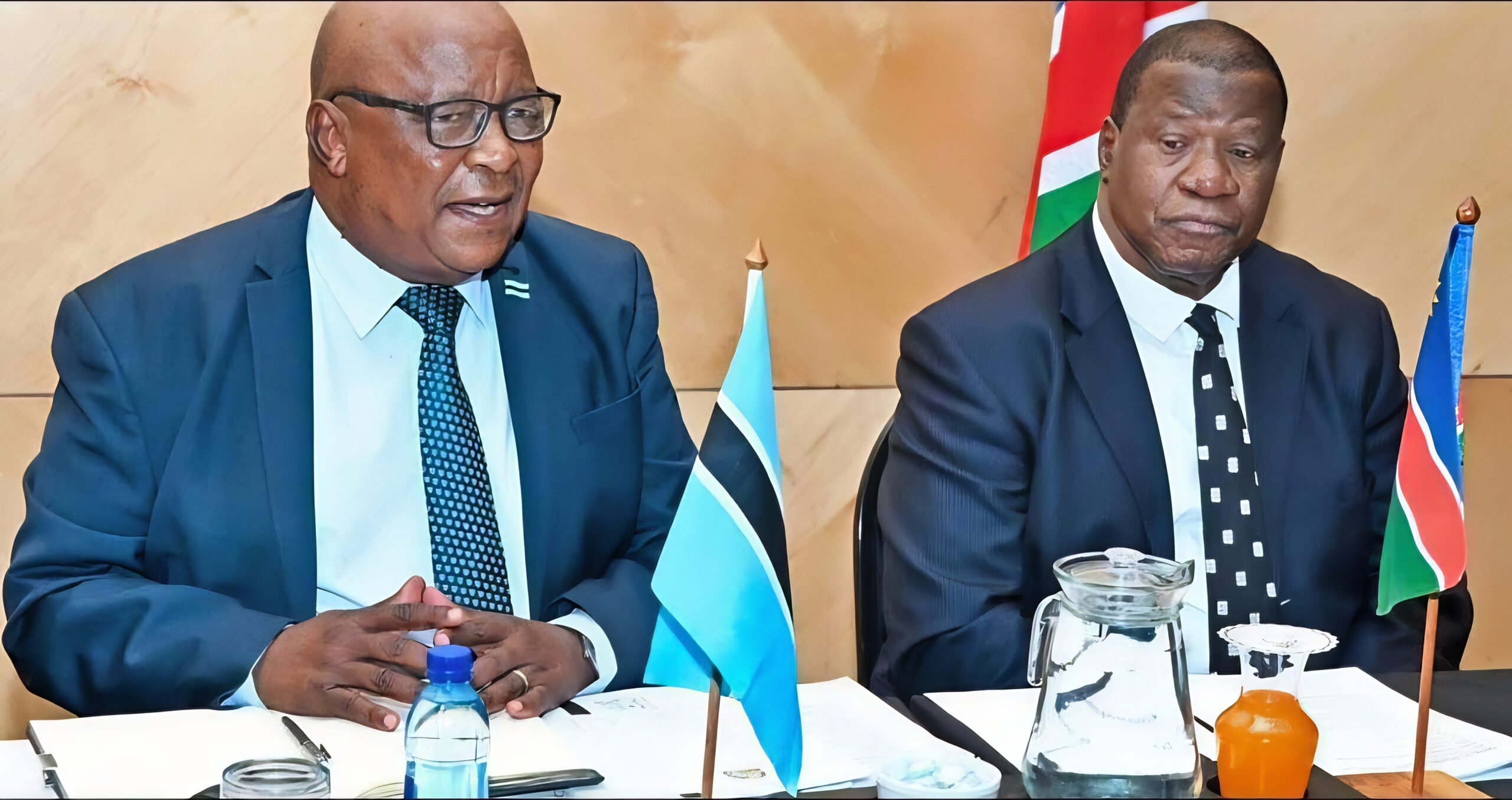
It is crucial for the success of the Trans-Kalahari Railway project that Botswana and Namibia maintain a strong collaborative relationship. Both countries are dedicated to promptly addressing any challenges that may arise.
The Role of Namibia: A Strategic Partnership
Namibia’s Minister of Works and Transport, John Mutua, emphasised the Trans-Kalahari Railway project as a core bilateral undertaking of strategic importance. The project represents a significant economic opportunity for both countries, and Namibia is committed to working closely with Botswana to ensure its success. The collaboration is not limited to the railway project and extends to other initiatives, including the Trans-Kalahari Economic Development Corridor.
Trans-Kalahari Economic Development Corridor: A Multilateral Initiative
In addition to the railway project, the Trans-Kalahari Economic Development Corridor involves three countries. The three countries involved are Botswana, Namibia and South Africa. The objective of this corridor is to enhance regional connectivity and promote economic growth through improved infrastructure and trade facilitation. While the recent discussions were primarily focused on the bilateral railway project, there is a commitment to convene a meeting involving all three countries at an appropriate time. The meeting will allow for further exploration of potential collaboration and development opportunities within the corridor.
Conclusion: A Vision for the Future
The Trans-Kalahari Railway project represents a forward-thinking initiative with the potential to transform transportation and economic development in Southern Africa. By enhancing transportation services and improving road safety conditions, the project has the potential to drive significant economic growth and infrastructure development. The joint venture between Botswana and Namibia is evidence of both countries’ commitment to achieving these goals. As the project progresses, it will undoubtedly play a pivotal role in shaping the future of the region, fostering stronger economic ties and promoting sustainable development.
Further information on the Trans-Kalahari Railway project and its impact on the region will be made available in due course.
Namibia Autonomous Media

- From Policy to Impact: Namibia’s Government Vows Overhaul at Windhoek Retreat - 7 December 2025
- The Man in Chains: Lolo Goraseb Exposes Rot in Namibia’s Public Service Management - 26 March 2025
- Driving Progress in Namibia: The Role of Digital Identity, Renewable Energy, and PR Strategies - 26 March 2025
Related Publications:
 Swakopmund Informal Settlement Upgrading Project: Transforming Lives through Modern Housing
 NAMIBIAN POLICE FORCE GRADUATION CEREMONY
 PRESIDENT NANGOLO MBUMBA CORDIAL WELCOME TO LUIZA DAMIÃO
 MPLA PAYS TRIBUTE TO NAMIBIAN HEROES MEMORIAL
 PRESIDENT NANGOLO MBUMBA ON A DIPLOMATIC MISSION
 REVITALISING LIVESTOCK MARKETS IN OUTAPI
 NAMIBIA AND BOTSWANA COLLABORATE TO COMBAT TRAFFICKING IN PERSONS